The industry improves the cell by about 0.5 percentage points of efficiency per year.

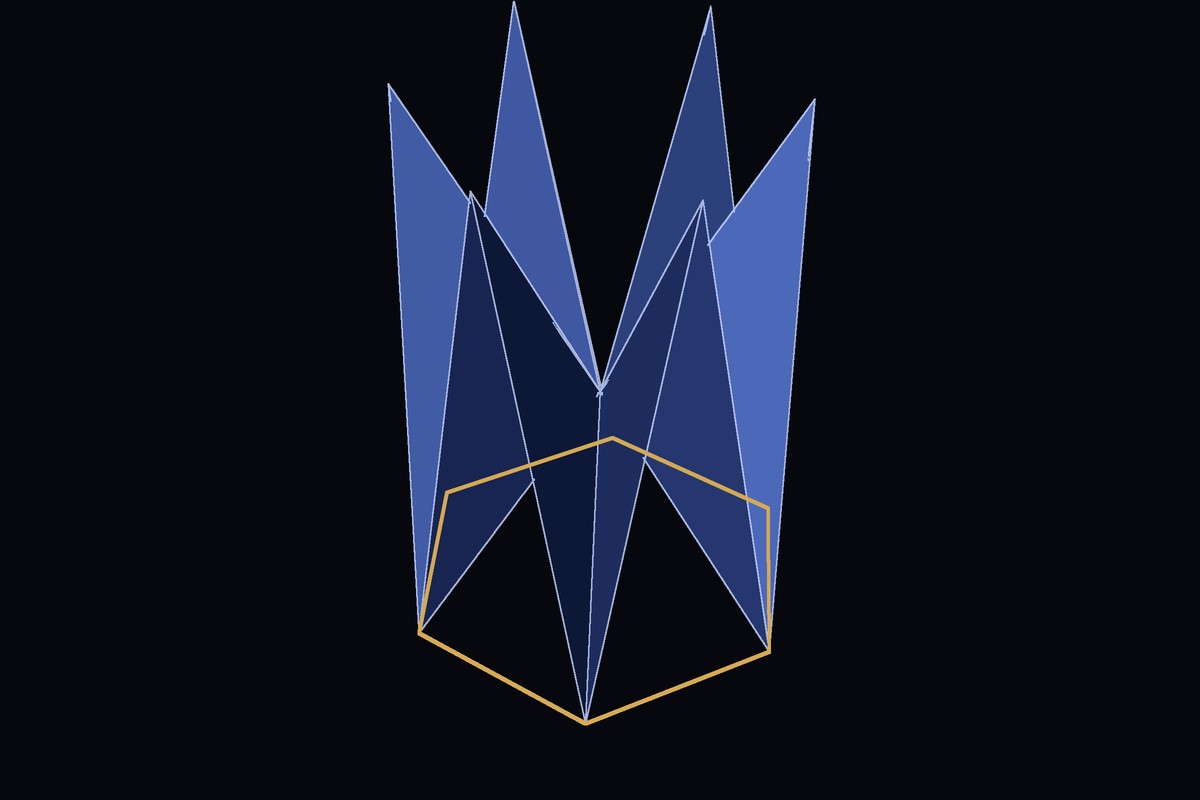
Non-binding visualization of the SHAVAS three-dimensional relief
Why SHAVAS
For seventy years, a solar panel has been a flat surface.
From the outset, research has focused on cell efficiency, gained a tenth of a point at a time. The geometry of the module, for its part, has remained flat.
The observation
The cell improves, the module stays flat
The geometry of the module, however, has not changed: a solar panel is still a flat surface.
Meanwhile, land and grid connection are becoming the scarce resources of solar power.
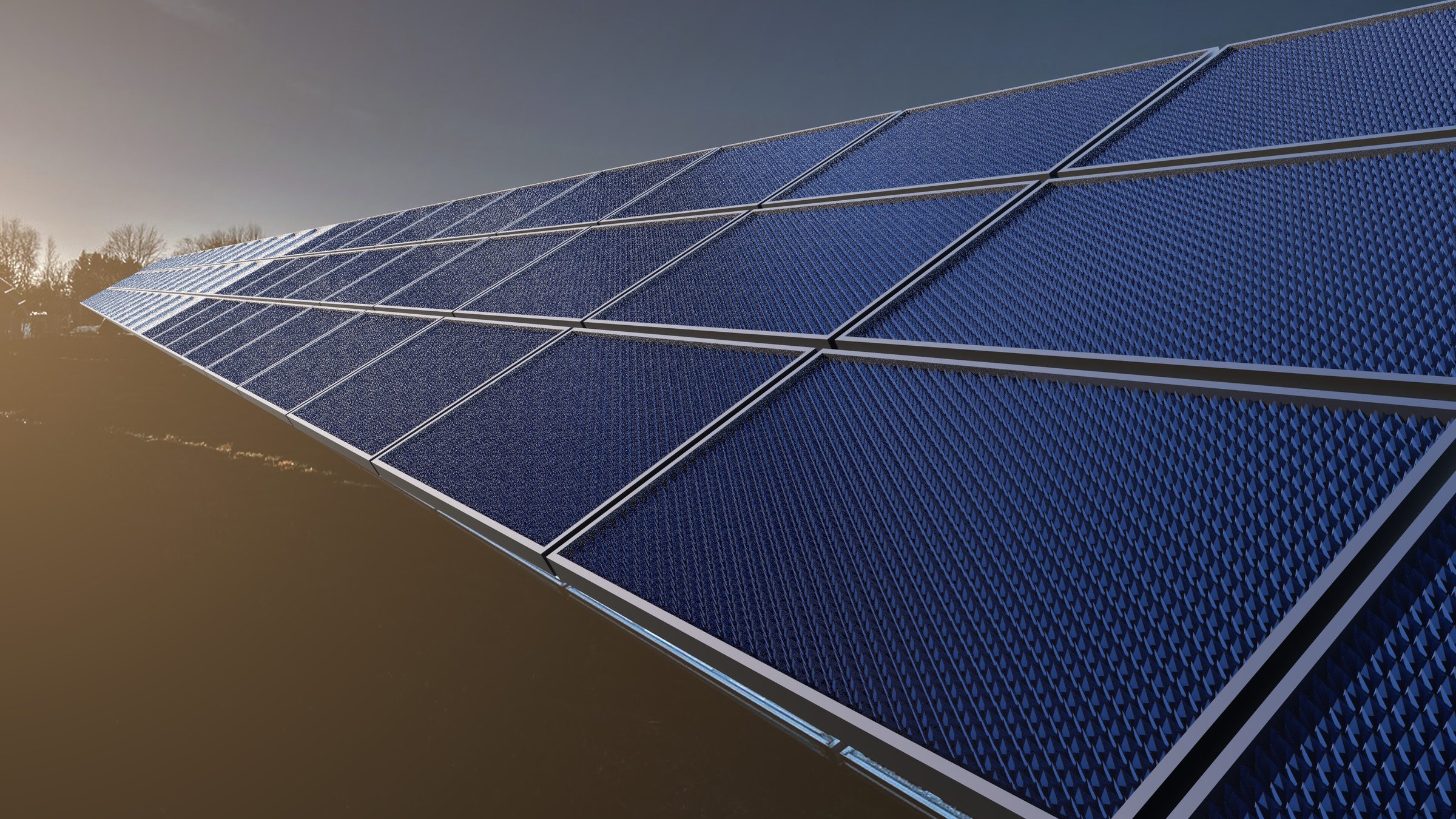
Artist’s impression
The idea
Stop asking the cell to do better: give it a better place in the sun
SHAVAS changes the geometry. Twelve facets oriented in complementary directions capture direct radiation, diffuse radiation and light reflected from the ground.
“That is the breakthrough. We no longer ask the cell to do better: we give it a better place in the sun. And this geometry applies to today’s cells as well as to tomorrow’s.”
What this changes
Three figures to understand
1.4 to 1.8 times
the energy of a flat module, on the same ground footprint.
36 to 51%
of annual solar energy arrives as diffuse radiation, from all directions, depending on the region.
1.8 to 2.3 times
the energy of today’s flat panel, with cells at 30% efficiency and an unchanged gain: the gain comes from the geometry and is cumulative with every advance in the cell.
For whom
Where every square meter counts, and where sunshine is scarce
Sites where every square meter counts
Industrial and agricultural rooftops, dense areas, islands, sites with a capped grid connection: revenue per square meter decides the project.
Regions with little sunshine
High latitudes, cloudy climates, long winters: the share of diffuse radiation is high there and the sun is low, two conditions that maximize the relative gain.
Compared with a conventional panel
The same surface, more energy
Three application examples. The comparison is expressed in energy, for the same equipped surface area.
 Artist’s impression
Ground-mounted solar plant
On the same land, more energy; for the same output, less land, fewer structures and less civil engineering.
See the use case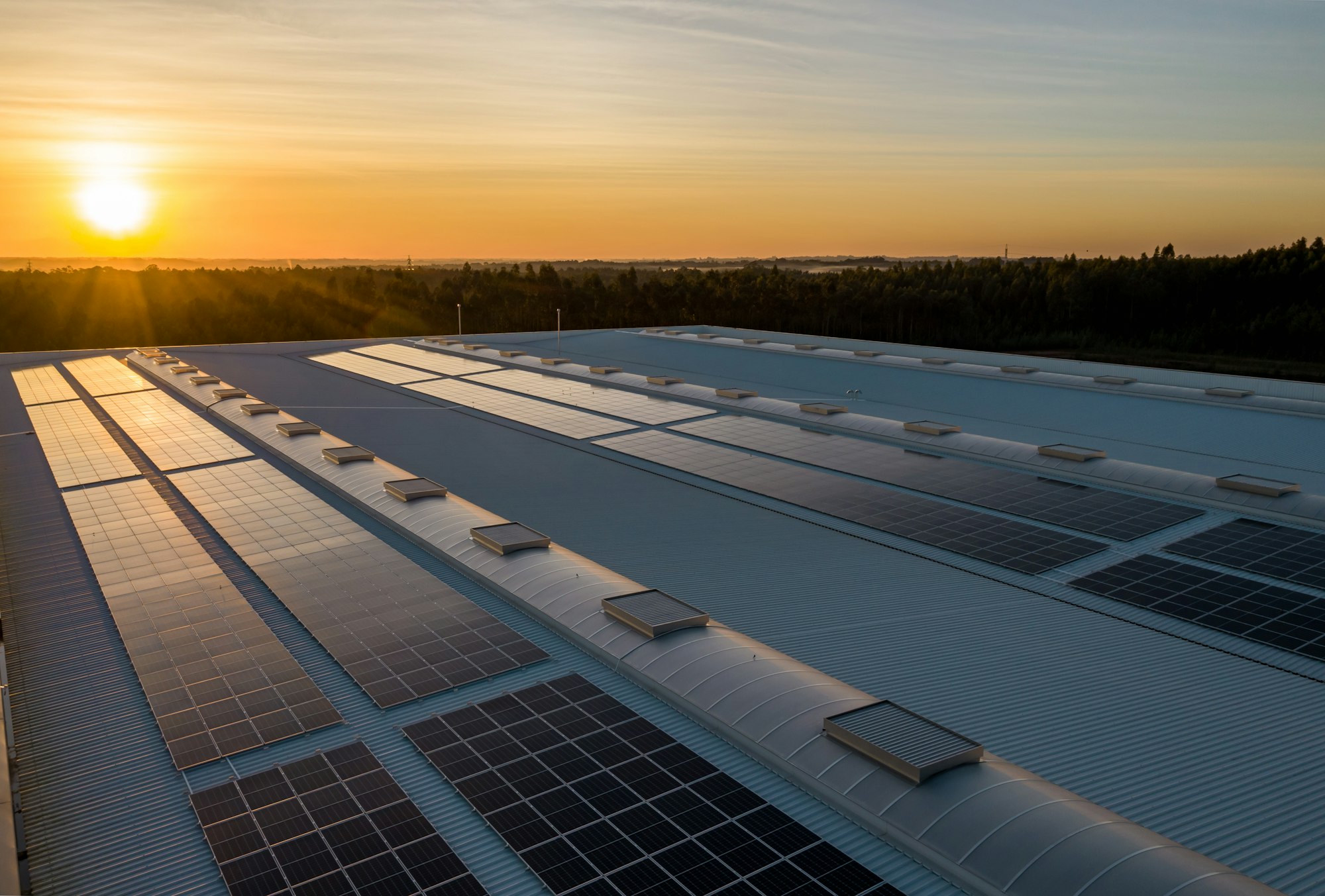 Illustrative photo
Industrial building
On a limited rooftop, more energy, and therefore more self-consumption and better revenue per square meter.
See the use case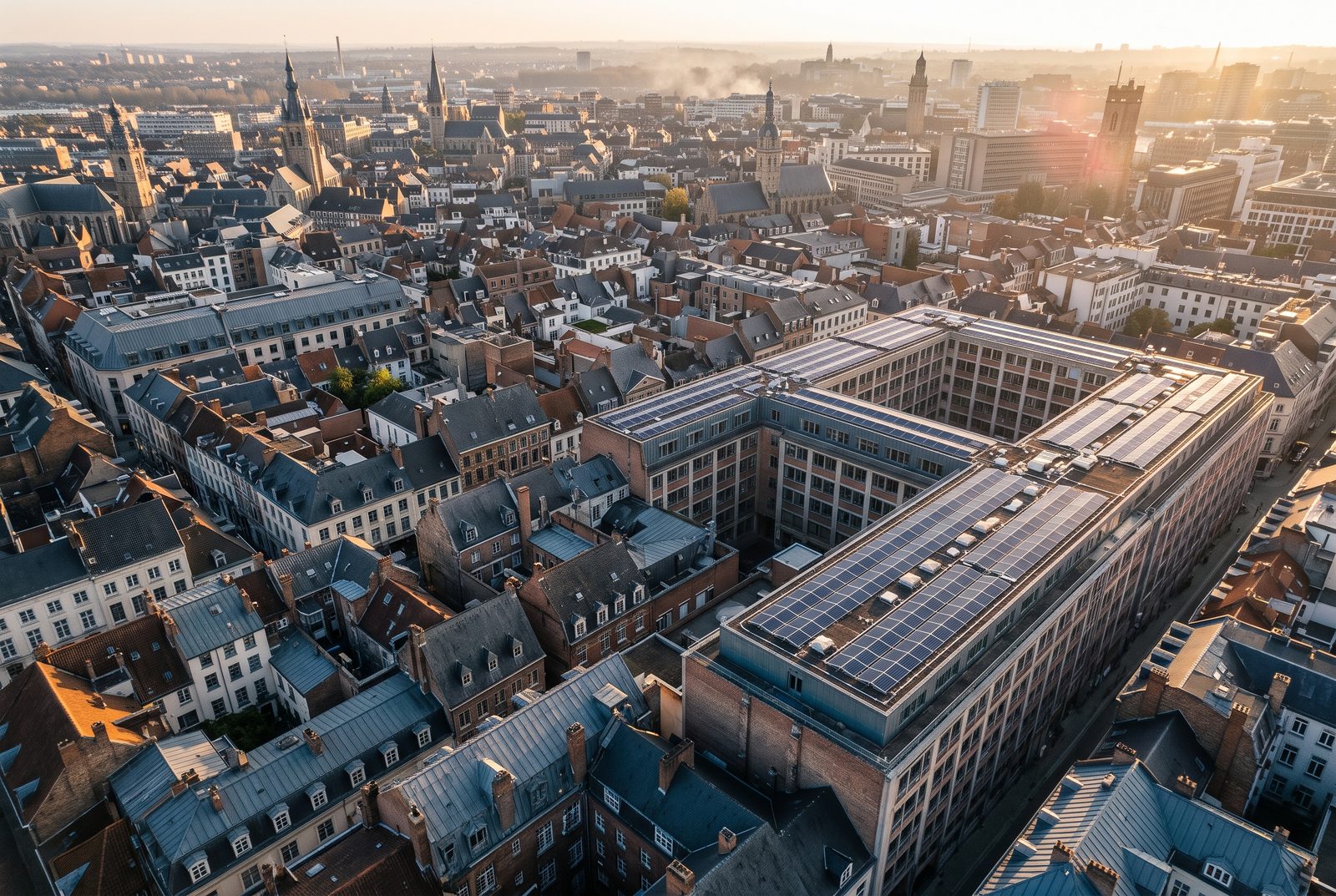 Artist’s impression
Urban area
Scarce land, cast shadows and diffuse light: this is where the three-dimensional relief stands out most.
See the use caseA technology to be judged on its evidence
What is established, what remains to be demonstrated, and the consolidation measurement, entrusted to independent laboratories under protocols set in advance: its first results are expected in early 2027.
See the evidenceAn intellectual property company
SHAVAS Technologies does not build panel factories. The company designs its geometry, protects it and licenses it to photovoltaic manufacturers.
See the patentsGo further
Discover SHAVAS in detail
The technology, its uses, and the information intended for investors.