November 2021
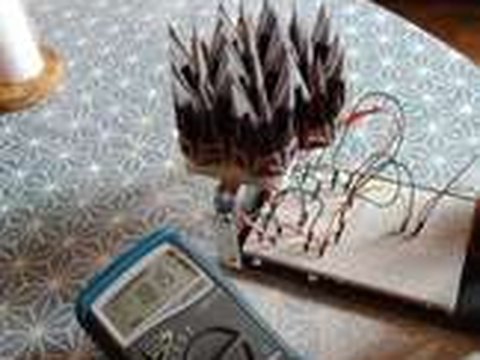
First prototype and first measurements.

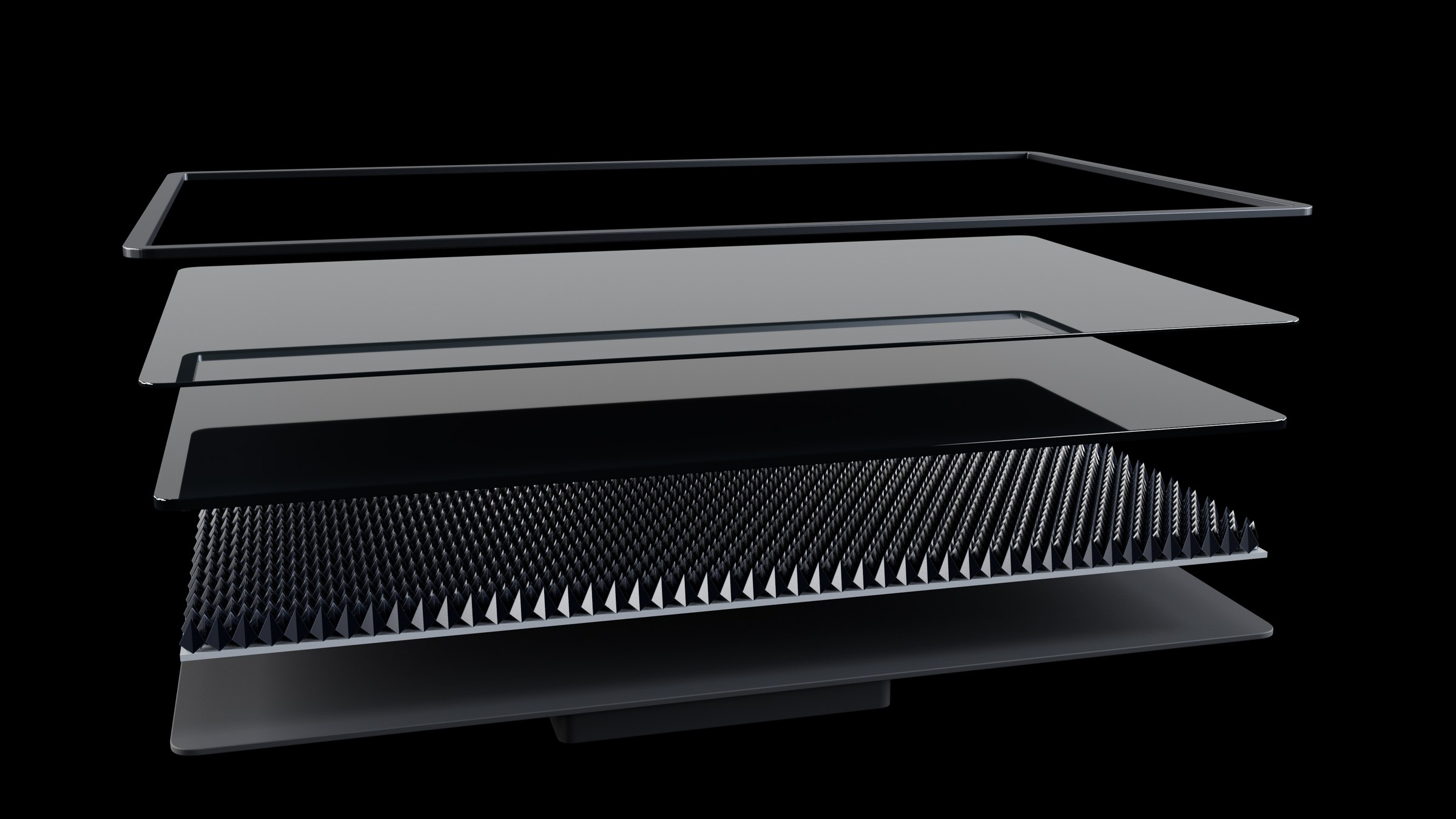
Non-binding visualization of the SHAVAS panel
A conventional module presents a single flat surface to the radiation. The SHAVAS module, built on a hexagonal base, forms a crown open to the sky: six peaks around its edge and twelve flat active facets, arranged around a central axis and facing each other in pairs.
The modules are laid side by side in an array and encapsulated between a transparent front sheet and a backsheet. The finished panel keeps the format and overall dimensions of a standard panel.
First prototype and first measurements.
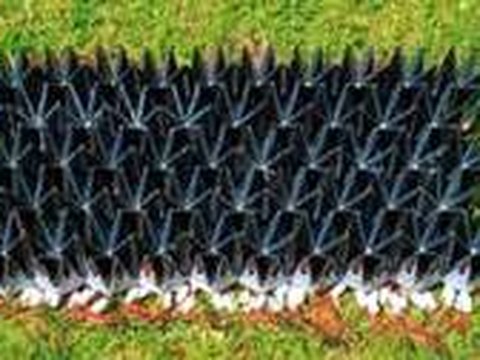
Full-scale demonstrator.

Second demonstrator, comparative measurements.
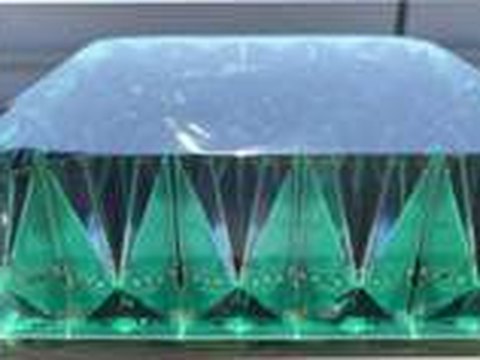
Encapsulated prototype, measured outdoors.
On the same ground footprint, the three-dimensional relief deploys a photovoltaic surface several times larger than that of a flat panel.
On the same footprint, the relief deploys an active surface roughly five times larger, depending on the geometry chosen.
At low sun elevations (morning, evening, winter), some of the facets receive radiation at close to normal incidence. The production profile widens instead of peaking at noon.
Simulations indicate a longer production window at the start and end of the day. The working hypothesis is about 45 additional minutes in the evening, with a comparable effect in the morning; if measurement confirms it, this represents several hundred additional hours of production per year.
These hours carry greater value: demand is high in the morning and evening, when solar production is low. A kilowatt-hour produced at these times is worth more than a kilowatt-hour produced at noon.
The laboratory draws two consequences for plant sizing, which remain to be quantified: a more spread-out production profile allows a higher ratio of installed capacity to inverter capacity; and equivalent production is achieved with fewer modules, and therefore fewer structures, less cabling and less installation work.
Production spread over the day. Concept diagram, not to scale.
At low sun elevation, radiation reaches a flat panel at low-angle (grazing) incidence, whereas it strikes the facets of the SHAVAS module at close to normal incidence.
+45 min at sunrise, +45 min at sunset: the 45 minutes are a working hypothesis to be confirmed by measurement, and the flat panel’s times are illustrative.
The module flares outward from the center to the edge. Radiation enters through the opening and reaches the bottom of the relief; mutual shading between the facets remains limited.
The facets face complementary directions. The module captures direct and diffuse radiation alike, from morning until late in the day.
Over a year, diffuse radiation accounts for 36 to 51% of the solar energy received at ground level, depending on which of the five sites studied, from Gibraltar to Minsk. It does not come from one direction but from the whole sky dome and from the ground. A flat panel presents only one face to it; the relief presents twelve. Under direct radiation, the module at least matches the flat panel; it is on diffuse radiation that it pulls ahead: simulations credit it with 1.7 to 2 times the diffuse radiation captured by the flat panel.
The higher the share of diffuse radiation and the lower the sun, the greater the relative gain. In simulation, in January it reaches 1.8 to 2.0 in Lyon, 1.9 to 2.1 in Minsk and 2.2 to 2.4 in Oslo, depending on ground reflection; over the year, Oslo comes out on top with 1.56 to 1.80. The gain is present at every site and in every season, in two forms: in winter and at high latitudes, the relative gain is greatest, on low production and at a time of high demand; in summer and at sunny sites, the absolute gain is greatest.
Mechanisms documented by the simulation and optics studies placed in the data room.

| Criterion | SHAVAS module | Flat panel |
|---|---|---|
| Active surface | Twelve facets per module | A single face |
| Active material on the same footprint | Roughly five times more | The reference |
| Radiation harvested | Direct, diffuse and reflected by the ground, on twelve faces | Direct and diffuse, on one face |
| Diffuse radiation captured (simulation) | 1.7 to 2 times | 1 |
| Production over the day | Spread from morning to evening | Bell-shaped, centered on noon |
| Annual energy on the same footprint | 1.4 to 1.8 times | 1 |
| Relative gain in winter, high latitudes (simulation) | 2.2 to 2.4 | 1 |
| Appearance of the finished panel | Identical to a conventional panel | Conventional |
On the same ground footprint: the production of an installation of flat panels, and that of the same installation in SHAVAS panels.
Factory rooftop: about 2,500 m² of panels.
Order of magnitude, non-binding, on the same ground footprint. SHAVAS gain: the established range of 1.4 to 1.8 times, applied to each month; the measurement consolidation prototype will refine the value. Detailed laboratory results in the data room.
Flat-panel production is calculated by PVGIS for an optimal tilt. The SHAVAS gain was established against a horizontal flat panel; its value against a tilted panel will be specified by the measurement campaign.
The twelve-facet crown is the original shape: it is the one described in the founding patent, and it is the one on which the laboratories’ simulations and measurements were carried out.
This shape is not set in stone. The industrial pre-design study carried out in 2025 with a specialized engineering firm took the same facets and assembled them differently, to make them simpler to manufacture and to connect. This assembly remains within the scope of the patent, as our patent attorney has confirmed.
That is the whole point: what the patent protects is a set of proportions. As long as they are respected, the shape can be optimized, for performance as well as for industrialization. Step outside them and you leave the scope of the patent, and efficiency degrades: between the two proportions compared by simulation, the gain on diffuse radiation varies by a factor of two (details in the data room).
The assembly for series production will be finalized in 2027, together with the choice of manufacturing process, in light of the consolidation measurements.
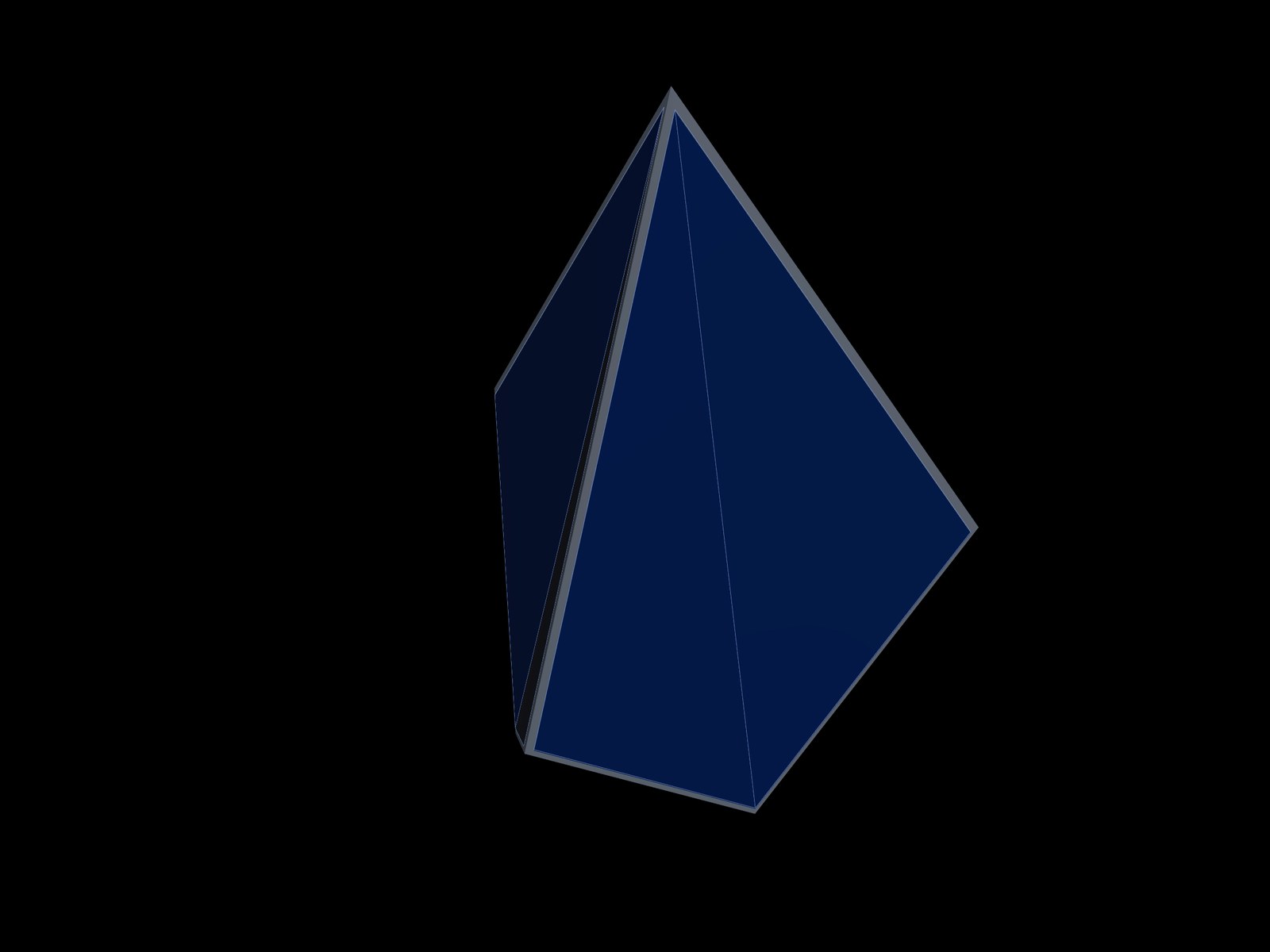
The module studied for series production: the same facets, assembled differently.

The tile: modules placed side by side. In yellow, one module.
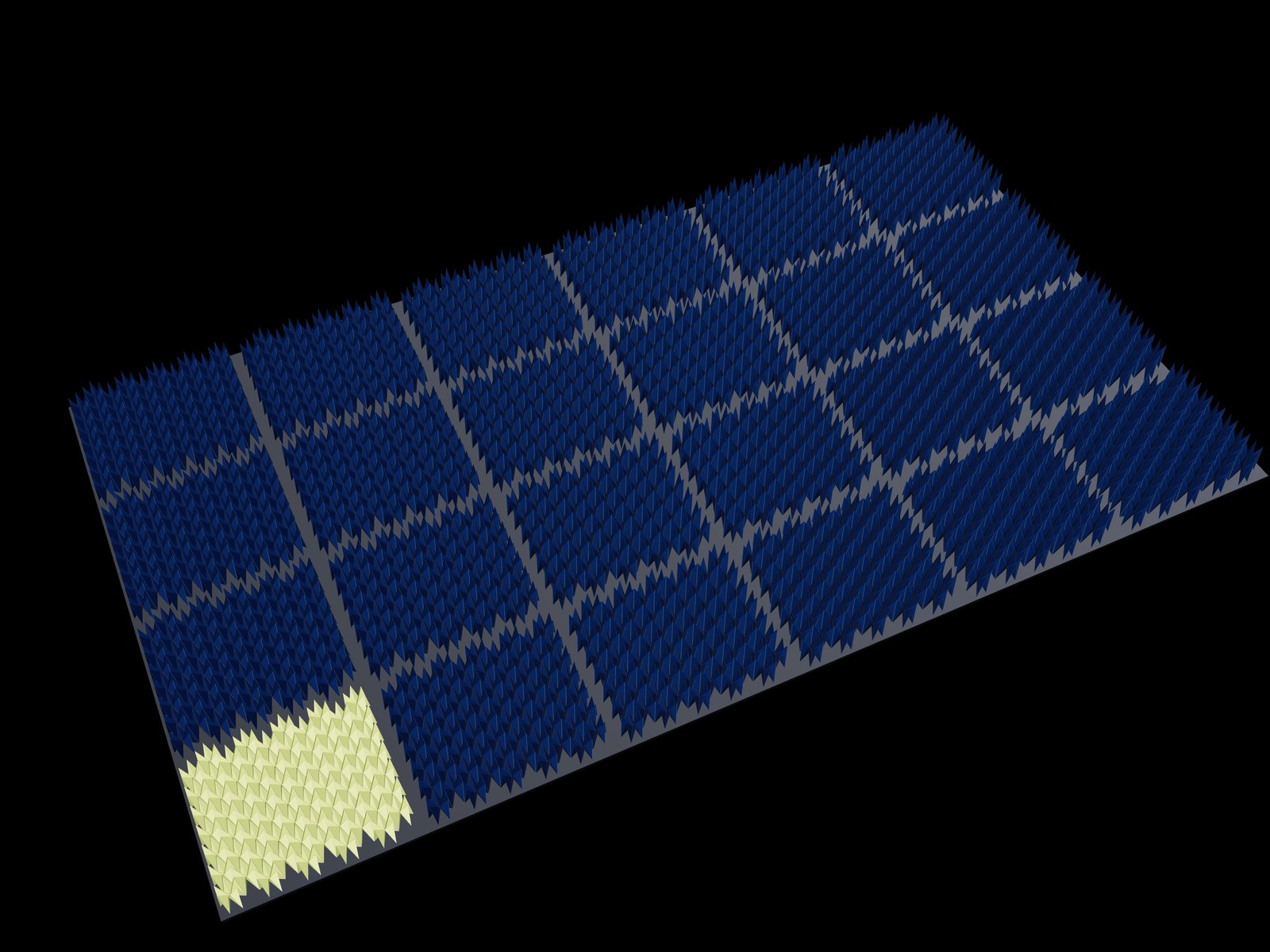
The panel: an assembly of tiles. In yellow, one tile.
Excerpts from the industrial pre-design study carried out in 2025. Geometry being optimized, not final. The full study is provided in the data room.
In silicon, commercial cells are cut into facets, then placed and connected: this is the route taken for the prototypes, and it relies on equipment already in production, to be adapted to the relief. In perovskite, the active layer is deposited directly onto the molded relief, with no cutting or placement. This second route has yet to be demonstrated on faces this steeply inclined.
Laser cutting, placement machines, ovens and soldering from the electronics industry: the routes under study rely on equipment already in service in industry. The work focuses on adapting it to the relief. The throughput target is that of current flat-panel lines.
The patent protects proportions, not a size. With the same proportions, a relief a few centimeters or a few millimeters high presents the same active surface and the same angles. A lower relief opens the way to lighter panels, for rooftops in particular. Whether the gain is maintained at this scale remains to be established by measurement.
The panel can be built from tiles, tested one by one before assembly and replaceable, from strips, or as a single block. The fewer the parts, the larger the machines: the trade-off will be decided through trials.
Several options are being studied at each stage and none has been finalized. Details of the processes are provided in the data room.
See the target markets and usesThree-dimensional solar collection was formulated and tested at the Massachusetts Institute of Technology in 2011, then published in 2012.
Its authors set three conditions for it to become cost-effective: low-cost manufacturing, suitable wiring and a controlled cost of electricity. These are the three areas SHAVAS is working on.
Reference: M. Bernardi, N. Ferralis, J. H. Wan, R. Villalon and J. C. Grossman, “Solar energy generation in three dimensions,” Energy & Environmental Science, vol. 5, 2012, p. 6880. doi.org/10.1039/c2ee21170j
1.4 to 1.8 timesthe energy of a flat module, on the same ground footprint. Gain established by two third-party organizations, one by simulation, the other by measurement. The measurement consolidation prototype will refine the value.
Energy produced on the same ground footprint.
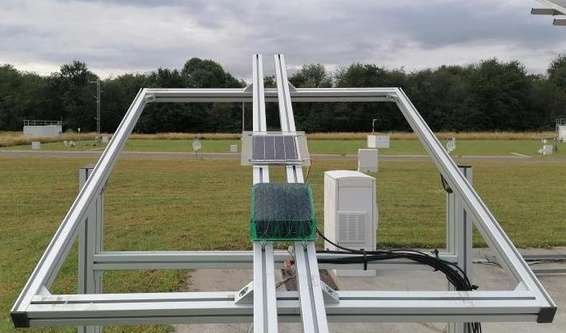
Since 2018, SHAVAS technology has been evaluated by leading European laboratories and by specialized engineering firms.
Annual production calculated over the four seasons, at five latitudes, from the equator to Scandinavia, by a major public research organization
Real-world measurements in the Paris region, by an independent laboratory: a full reading every five minutes for six days, against a flat reference
Optical modeling
Electroluminescence analysis of the cells
The full reports can be consulted in the data room, after signing a non-disclosure agreement (NDA).
Request access to the data roomA new technology should be judged on its evidence and on how clearly its limits are stated. Here is the current state of knowledge, level of evidence by level of evidence.
This program is our objective. Its final scope will be set with the industrialization team; the protocol will be placed in the data room once finalized.
The SHAVAS modules and the flat references would be made of the same material, from the same batch of cells, and compared on the same ground footprint.
Several instrumented SHAVAS modules would be measured against flat references and against a commercial module.
The comparison would focus on the maximum power point: I-V curve and energy produced over the day.
The test protocol will be validated with independent laboratories before any measurement.
First results are targeted for early 2027; they would be followed by several months of outdoor measurements.
The laboratory that measured the 2024 prototype under real-world conditions describes it as an object that is “imperfect and has not been optimized,” for which “the margins for improvement are therefore very significant.”
With tall structures, cubes and towers, the Massachusetts Institute of Technology measured energy densities 2 to 20 times those of a fixed flat panel. SHAVAS is targeting this potential within the thickness of a panel.
The measurement consolidation prototype will be measured at the maximum power point against a flat reference made of the same material, under a protocol validated in advance with the laboratories. It will refine the gain of the reference shape.
Details of the measurements and the name of the laboratory are provided in the data room, after signing a non-disclosure agreement (NDA).
Request access to the data roomDoesn’t shading between the facets cancel out the gain? And how does it compare with bifacial modules and solar trackers?