Whether you are looking to take a license, to acquire the technology as a whole or to support it, here is what you will find at SHAVAS, and what can be verified document by document in the data room.
70 yearsof flat panels
A breakthrough through shape
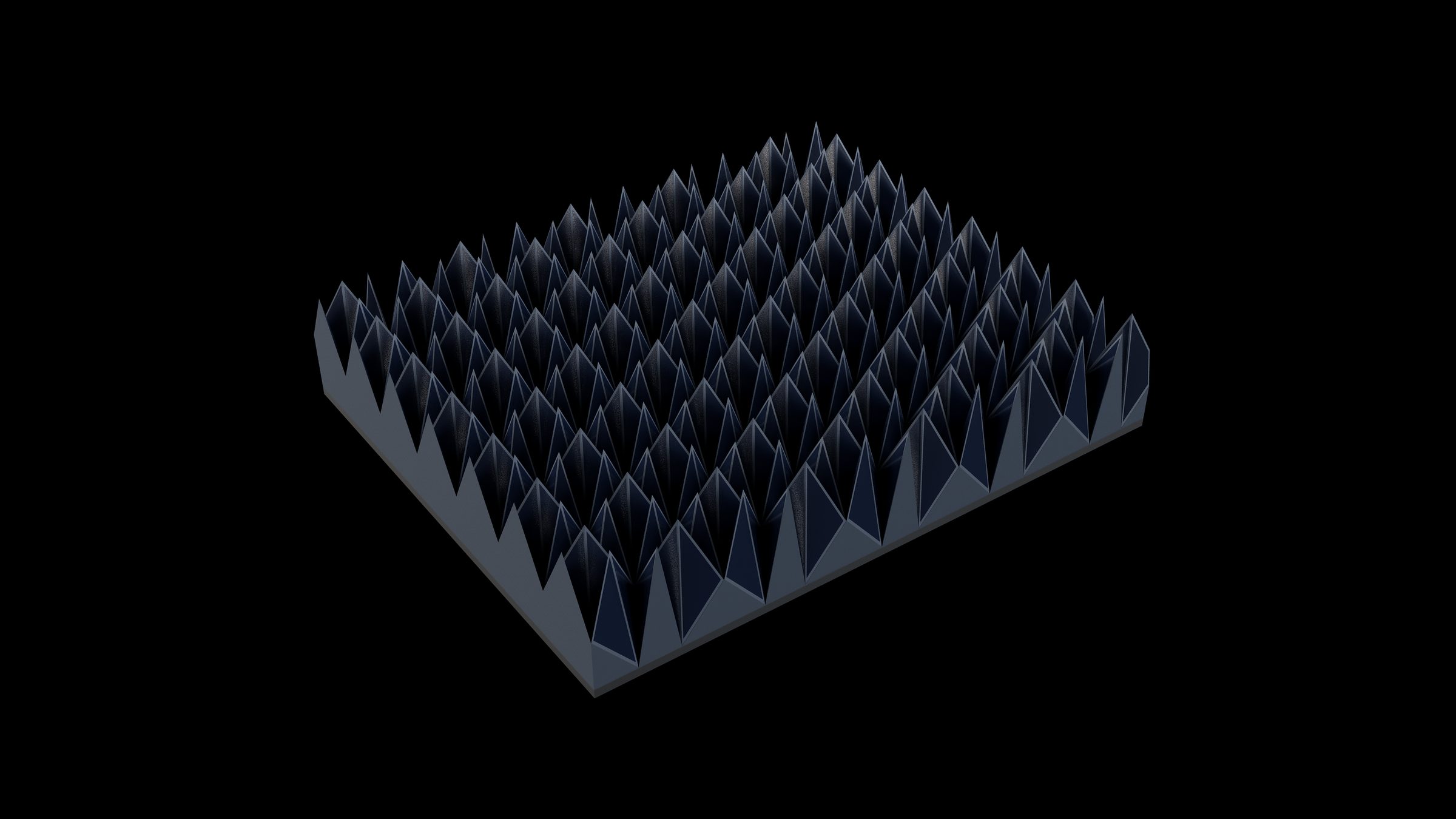
For seventy years, the industry has been improving the cell, by about 0.5 percentage points of efficiency per year. SHAVAS changes the geometry of the module, not the chemistry of the cell: a lever that remains unexploited at industrial scale.
1.4 to 1.8times the energy of a flat module
Third-party measurements
An annual gain of 1.4 to 1.8 times on the same ground footprint, established by simulation and by measurement, by two independent organizations. In simulation, it reaches 2.2 to 2.4 in winter at high latitudes. What has been established and what remains to be demonstrated are set out in black and white.
−17% to −25%per kilowatt-hour, at a gain of 1.8: in silicon, then in perovskite
A cheaper kilowatt-hour
The panel costs more; the electricity costs less. As soon as the gain exceeds 1.5, the cost per kilowatt-hour falls below that of a conventional solar plant, and every additional tenth of gain widens the gap. At a gain of 1.8, the savings reach 17% with silicon cells; with perovskite, at the costs targeted by the engineering firm, they reach 25%. And the sector is still in its early days: its costs are set to fall further with industrialization.
1.8 to 2.3times today’s flat panel, with tomorrow’s cells and an unchanged gain
Today’s cells and tomorrow’s
A geometry compatible with silicon and perovskite alike, and with the tandem cells that will combine them. SHAVAS does not compete with advances in the cell: it multiplies them. With cells at 30% efficiency instead of 23% today, the same gain would give 1.8 to 2.3 times the energy of a current flat panel.
4 familiesof patents: the shape, the backsheet, the circuit, the process. 18 countries for the founding patent
A protected technology
Outside the SHAVAS proportions, the gain deteriorates. This geometry is covered by four patent families. The founding patent has been granted in Europe and the United States, with applications filed in Asia and priority secured since 2021. It protects the shape; three complementary families protect the module’s backsheet, its circuit and its manufacturing process. No opposition to date.
0 factoriesto finance in-house
Designed for industry, capital-light
A finished panel in a standard format, and a licensing model with no factory of its own. In our plan, the first license sold covers the company’s operating costs until the pilot line is commissioned and the first series production is launched; the pilot line itself falls under dedicated financing, currently being structured. The financing plan is presented in the data room.
Early 2027first measurement results expected, then a new assessment
A dated next step
The next step is not a distant promise: it is a measurement, entrusted to independent laboratories under protocols set in advance. Its first results are expected in early 2027. The company will then have its technology re-evaluated on that basis.
43shareholders around the project
Support already in place
Forty-three shareholders, mostly business owners, engineers, and finance and intellectual property professionals, aged from 25 to over 70; interest expressed by industrial companies and investors from three regions of the world, two letters of intent, and discussions under way with public authorities.
If you are an investor
You are joining a company that owns all of its intellectual property, whose model is based on licensing, and whose next step is a dated measurement carried out by third parties.
You will find a complete patent portfolio, held in a single company, audited and free of opposition, and eight years of research that a license or an acquisition spares you from redoing.
The gain at the maximum power point, compared with a flat reference made of the same material.
Process patents
Arising from the industrialization work.
Pilot line
Preparatory work for series production.
What this changes for SHAVAS
In our plan, the first license sold covers all of the company’s operating costs until the pilot line is commissioned and the first series production is launched. It secures cash flow without depending on the timing of public funding, which supplements the financing. From that point on, the company no longer depends on raising capital to operate.
First conversation
How a first conversation works
Technical and financial documentation is shared after a non-disclosure agreement has been signed. The data room is kept off the public website, by personal invitation only.
Getting in touch
You write to us, stating your profile: investor, industrial company or institution.
First video call
We get to know each other and answer your initial questions.
Presentation pack
Following this conversation, we send you a summary presentation of the project.
Data room, under a non-disclosure agreement
If you wish to go further, signing a non-disclosure agreement gives you access to the reports, patents and studies on which this website is based.
Technical discussion
We arrange a meeting with the technical team and, by appointment, a presentation of the prototype.
Investor contact
Write to us
Introduce yourself in a few lines: we will get back to you for a first conversation.
The form opens your e-mail app with a message ready to send to investisseurs@shavas.eu. No data is stored on this website.